“`html
How to Tell Fish Age
Have you ever wondered how to determine the age of a fish? Whether for scientific research, aquarium hobbying, or sheer curiosity, understanding a fish’s age can unveil fascinating insights into its lifecycle and environment. This blog post delves into various methods of aging fish, primarily focusing on the anatomical features that reveal these timelines. We’ll explore which part of a fish is crucial for age estimation, methods to calculate a fish’s age accurately, alternative aspects of fish biology that could offer insights, and tools to aid in this growing field, particularly for those involved in commerce. By the end of this read, you’ll have a robust understanding of the methods used by scientists to peer into the underwater world of fish aging.
How old are you?
Determining the age of a fish is not as straightforward as counting tree rings, although the concept is similarly based on growth patterns. Unlike mammals, fish grow throughout their lives, which means their age can often be discerned by examining certain parts of their anatomy. Accurate age determination can be invaluable, providing data relevant to fisheries management, ecological research, and conservation efforts.
Most fish age determination relies on understanding growth increments found in certain body structures. Growth rates in fish are influenced by various factors, including environmental conditions, available nutrients, and species-specific metabolic rates. By examining these growth patterns, scientists can efficiently estimate the age of a fish, contributing to our understanding of fish populations and the health of aquatic ecosystems.
Which part of a fish can be used to work out their age?
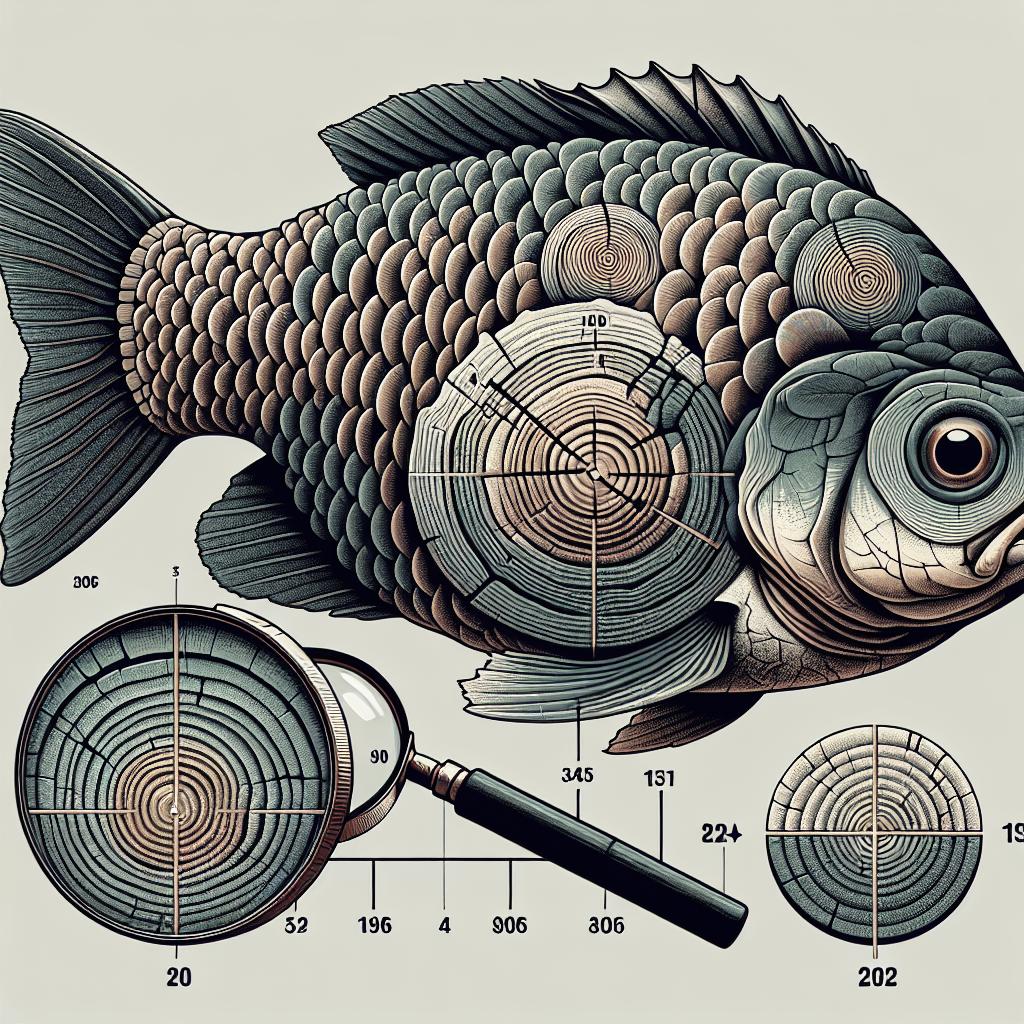
The most common method for determining the age of fish involves examining otoliths, also known as ear stones. These calcium carbonate structures, located within a fish’s head, are analogous to human inner ear bones and help with balance and hearing. Each year, as the fish grows, a new layer of calcified material is deposited around the otolith. This allows researchers to cross-section the otolith and count these layers, much like counting tree rings, to determine age.
Aside from otoliths, other body parts such as scales, vertebrae, and fin rays can reveal age-related information. Scales grow in concentric layers, reflecting changes in growth similar to otoliths, albeit less reliably due to their exposure to external wear and environmental factors. Nonetheless, in many situations, they remain a non-lethal alternative for aging fish, especially in smaller, delicate species.
How To Calculate How Old A Fish Is
The process of calculating a fish’s age typically involves cross-sectioning otoliths and examining them under a microscope. Each band visible in the cross-section typically represents one year, corresponding to periods of slower growth, often during colder months. It’s crucial to ensure accurate sectioning and proper magnification under the microscope to avoid miscounting these growth increments.
Software tools can enhance the precision of this method by digitally counting and analyzing the growth rings. Such technology aids in maintaining consistency across different samples and reduces the potential for human error. Furthermore, sophisticated imaging techniques such as X-ray or CT scanning can provide detailed internal views of otolith structures without physical cutting, preserving samples for future studies.
Looking for something else?
While otolith examination is the gold standard for fish aging, some researchers seek alternative methods that may offer insights into a fish’s lifecycle without needing dissection. Genetic studies are emerging as a potential means of providing age estimates by examining telomere length, which shortens with age in many organisms. Though in its early stages for aquatic species, this method could eventually complement traditional techniques.
Another area of interest is the analysis of fish eye lenses, which, like otoliths, can possess growth patterns that mirror the age of the fish. Research into this area is ongoing, and integrating these methods could broaden the toolkit available to aquatic researchers, offering multiple perspectives on fish aging without needing as many invasive techniques.
Shopping Tools
For those involved in fish trade or aquaculture, understanding fish age can be crucial for marketability, tracking growth rates, and ensuring sustainable practices. Utilizing age-determination tools and databases helps stakeholders manage and conserve stocks more effectively. Online platforms, offering software and hardware for aging fish, are becoming widely accessible, allowing more participants to partake in scientific research directly.
Aside from traditional equipment, digital solutions are on the rise. Various software applications specifically designed for fish age analysis are available, providing user-friendly interfaces and integration with databases to track and analyze fish population age distribution. These tools are particularly beneficial for fisheries managers and ecological consultants aiming for precision and sustainability.
Future Prospects
| Method | Description | Applications |
|---|---|---|
| Otolith Examination | Counting growth rings in fish ear stones. | Research & Fisheries Management |
| Scale Analysis | Assessing growth rings on fish scales. | Non-lethal, suitable for delicate species |
| Digital Tools | Software for image analysis of growth rings. | Consistency and Precision in Age Determination |
| Genetic Studies | Examining telomere lengths for age estimation. | Potential Future Complementary Technique |
| Eye Lens Analysis | Studying growth patterns in fish eye lenses. | Innovative and Non-invasive Method |
“`