“`html
Beginners Guide – Fly Tying Tools Explained
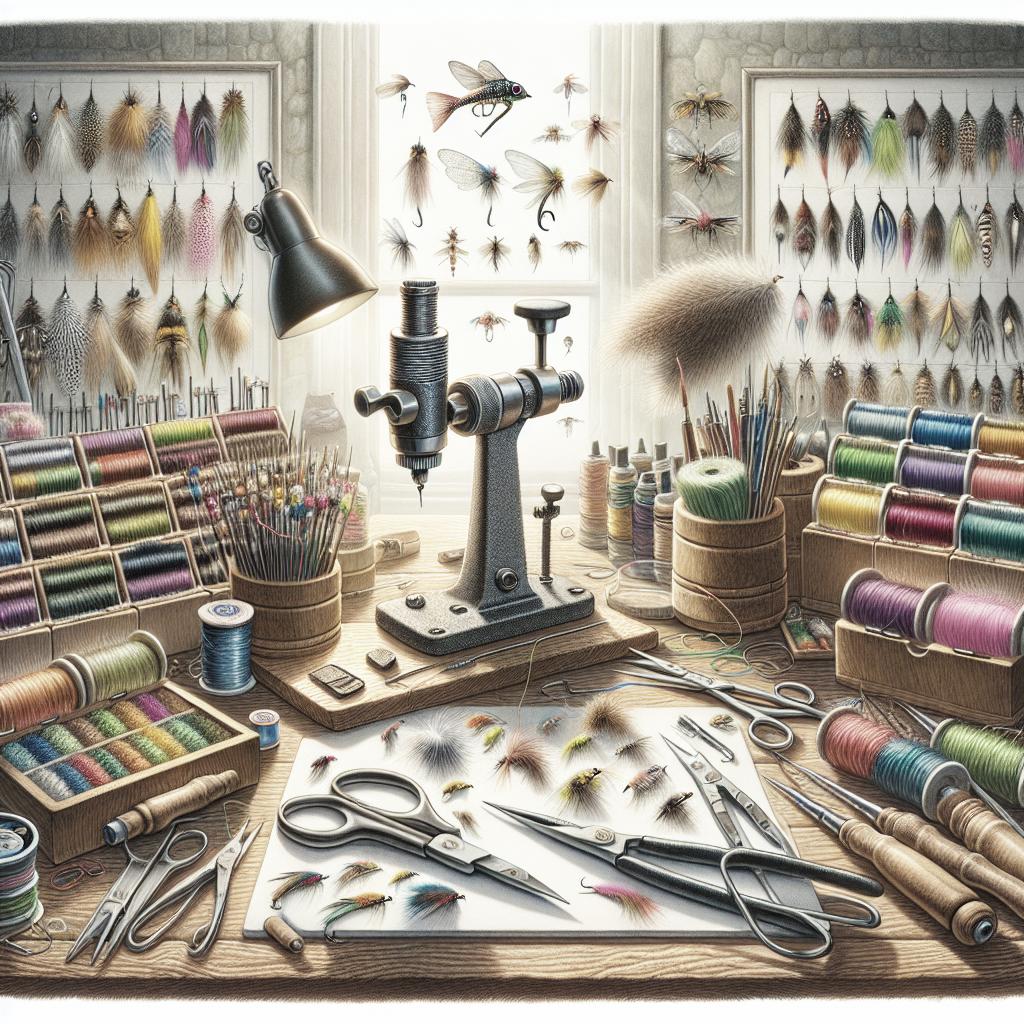
Fly tying can be an art and a science, requiring the right set of tools and techniques to craft fish-attracting flies. As a beginner, it’s important to understand the assortment of equipment necessary for successful fly tying. This blog post provides a comprehensive overview of the essential tools you’ll need, such as scissors, bobbin holders, and whip finish tools. Each tool plays a specific role in the process, helping you achieve the finesse and precision needed for effective fly presentation. We will dive into the specifics of each tool, offer insights into handling them, and introduce you to additional tools that will aid in refining your fly tying skills. For those just starting out or even seasoned pros looking to refresh their knowledge, this guide ensures you’ll have the foundation you need.
Your Introduction To Basic Fly Tying Tools
Fly tying is a time-honored tradition among anglers, providing a unique blend of practicality and creativity. Understanding the basic tools for fly tying is the first step for anyone looking to delve into this hobby. Each tool has a unique purpose and mastering their use can significantly improve your skill and efficiency in creating flies.
For newcomers, the amount of available equipment might seem overwhelming, but beginners can start with a simplified toolkit focusing on essentials. Familiarizing oneself with these tools not only helps in crafting effective flies but also in preventing frustration brought on by incorrect handling. Learning the correct usage and maintenance of these tools ensures longevity and optimal performance.
Advanced fly tyers often develop a personal preference for specific tools. Finding comfort with essential tools early on, coupled with gradual exploration of complex ones, facilitates a seamless journey from beginner to expert.
Essential Fly Tying Tools List
Scissors
Scissors are indispensable in the world of fly tying. Designed specifically for this craft, fly tying scissors have fine tips and are generally small, allowing for precision cutting. The sharpness and fineness of these scissors ensure clean cuts, which are imperative in crafting aesthetically pleasing and functional flies. Investing in a high-quality pair, adjustable (for finger size), and with fine points is recommended to enhance your fly tying efficiency.
There are various types of scissors available, from all-purpose to fine-tipped variations meant for specific tasks like cutting thread or feathers. Over time, tyers may find it beneficial to own multiple pairs tailored to different materials. Regular maintenance of scissors, such as sharpening and cleaning, is vital in maintaining their performance quality.
Bobbin Holders
The bobbin holder is an essential tool, acting as a bobbin’s anchor during fly tying. It ensures that the thread remains taut and manageable, allowing for a smooth layering over the hook. The bobbin holder’s tension control is crucial, helping prevent the thread from unwinding unexpectedly or breaking under pressure.
Bobbin holders come in various designs and materials, including ceramic and steel tubes, which determine the smoothness of the thread’s passage and durability. Selecting a bobbin holder with a well-contoured shape can prevent hand fatigue during prolonged sessions, ensuring comfort alongside functionality. Proper care, like thorough cleaning, prevents friction that can damage the thread over time.
Bobbin Wire Loop Tool
The bobbin wire loop tool serves a critical role in managing different threads that may not easily fit through a bobbin tube. This streamlined tool aids in threading the bobbin holder effortlessly, minimizing wasted time and potential frustration.
Mastering the wire loop tool’s technique ensures rapid transitions between threads and maximizes efficiency. It’s particularly useful in situations that call for quick alterations, allowing for seamless continuity in your tying process. Many beginners find this tool invaluable for simplifying what could otherwise be a cumbersome task.
Hair Stackers
Hair stackers help align fibers’ tips to create uniform wings and tails for dry flies. This tool makes it easier to shape the hackle of a fly, thus ensuring aesthetic symmetry crucial for effective fly presentations on water surfaces.
This tool consists of two metal cylinders, with one fitting neatly into the other. By tapping the stacker on a solid surface, loose hair aligns at its tip, resulting in a neat, efficient bundle ready for tying. As such, hair stackers are quintessential for quality control and to emulate natural-looking flies.
Dubbing Needles or Bodkins
Dubbing needles, also known as bodkins, are sharp-pointed tools used for separating fibers and applying cement or lacquer to finished flies. This versatility makes it a staple in any fly tying kit, ensuring each fly receives detailed attention and durability.
Bodkins assist in evenly distributing materials and ensuring the accuracy of thread wraps. Their ability to address intricate tasks means they are key in achieving meticulous detail work, especially when creating complex fly designs that require precision. Choosing the right bodkin can depend on your comfort with its grip and handling.
Whip Finish Tools
The whip finish tool is vital for securing threads neatly. This tool performs the crucial function of tying a knot at the end of the winding process, preventing the unraveling of your meticulously crafted fly.
While it may seem challenging at first, learning to use this tool becomes a rewarding skill, preserving the integrity of your work. Tutorials and practice are often the best ways to master it, despite initial difficulties. Different designs incorporate various knotting techniques; finding the one that suits your style can greatly enhance your tying proficiency.
Hackle Pliers
Hackle pliers hold hackle feathers while wrapping them around a fly’s body, creating realistic-looking fly wings. Their ergonomic design helps to handle slippery feathers with precision without damaging delicate materials.
Optimally choosing hackle pliers involves considering the comfort of grip and the strength of their hold. It’s essential to match the size and type of pliers with the materials you frequently use to prevent unnecessary slippage. Adjustments for versatile handling will cater to different hackles and increase overall tying efficiency.
Dubbing Twister
The dubbing twister simplifies the process of twisting fibers to create fly bodies with lifelike movement. This tool enhances the texture and appearance, allowing you to achieve flies that mimic natural insect forms.
Utilizing a dubbing twister can add volume and movement, enticing more strike from fish. It’s especially useful in creating effective nymph imitations. The consistency of the twist and the tool’s handle comfort are key factors when selecting the best twister for your flies.
Other Useful Fly Tying Tools
Beyond the essentials, various auxiliary tools can greatly aid in improving your fly tying method. Tools such as night lights, magnifiers, and hackle gauges add notable value by supporting detailed craftwork in low-light conditions and intricate designs.
Organizational tools like hook holders and tread post organizers promote cleanliness and accessibility during sessions, increasing your workspace’s efficiency. Over time, as one’s experience expands, engaging with these additional tools can greatly enhance your crafting skill and flexibility.
Fly Tying Vices
Fly tying vices are perhaps the cornerstone of this discipline. They securely hold the hook in place while you apply different materials, dramatically enhancing accuracy and detail management. Vices come in various styles, including stationary and rotary, with the latter allowing a 360-degree rotation that can greatly benefit detailed fly construction.
Choosing the right vice greatly influences the ease of the overall tying process. Factors like the type of flies you tie, preferred materials, and rotation requirements dictate the choice of vices. Longevity and adaptability are key considerations, as the right vice grows with your skills and proficiency.
Investing in a quality vice not only aids in precision but also in workflow consistency, ensuring the tools’ adjustment doesn’t hinder your progressive fly-tying journey. Beginner-friendly options are generally more affordable, while advanced models offer more extensive features to experienced tyers.
Fly Tying Departments
Fly tying departments, often found in fishing stores or specialized shops, serve as great hubs to expand your knowledge and upgrade your toolkit. They provide a space to explore different materials, tools, and techniques under the guidance of experienced professionals.
These departments often conduct workshops which can be of immense value to both beginners and seasoned fly tyers. Attendees can gain hands-on experience and recommendations tailored to their specific needs and goals. Engaging with the fly-tying community enriches your understanding and fosters improvement beyond individual practice.
Exploring diverse environments can offer new insights into varying methods, encouraging flexibility and adaptation in your craft. Retailers and forums further deepen the learning experience, building a robust knowledge base that underpins successful fly creation.
Next Steps
| Tool | Purpose |
|---|---|
| Scissors | Precision cutting of materials. |
| Bobbin Holders | Maintains thread tension. |
| Bobbin Wire Loop Tool | Assists in threading bobbins. |
| Hair Stackers | Aligns hair fibers uniformly. |
| Dubbing Needles or Bodkins | Applies cement and separates fibers. |
| Whip Finish Tools | Secures thread with knots. |
| Hackle Pliers | For wrapping feather hackles. |
| Dubbing Twister | Twists fibers for fly bodies. |
| Other Tools | Enhance fly tying efficiency. |
| Fly Tying Vices | Holds hooks securely. |
| Fly Tying Departments | Offer tools, materials, and workshops. |
“`